Suicide Prevention Month: Making Mental Health a Safety Priority in Construction

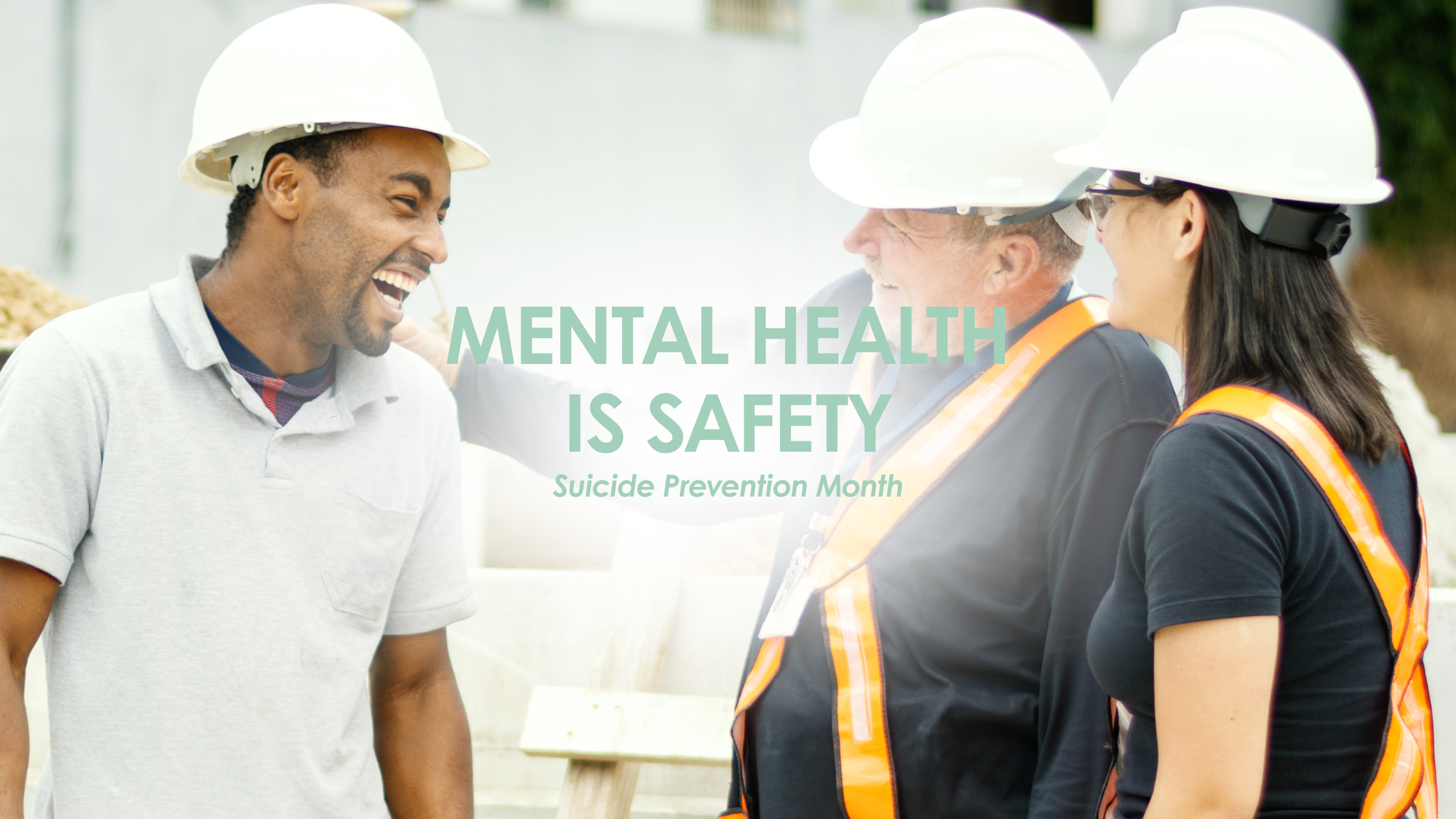
Every September, Suicide Prevention Month serves as a reminder that safety goes beyond hard hats, harnesses, and hazard assessments. In the construction industry, where workers face demanding schedules, physical strain, and high-pressure environments, mental health deserves the same attention and commitment as physical safety.
Construction professionals are known for their resilience. They solve problems, overcome challenges, and keep projects moving forward even in the toughest conditions. But with that resilience often comes an expectation to "tough it out" when life becomes overwhelming. Unfortunately, that mindset can prevent individuals from seeking help when they need it most.
The construction industry has made significant progress in creating safer worksites. Proper training, jobsite inspections, and worker engagement have helped reduce physical risks. Yet mental health challenges can be harder to recognize because they are often invisible. Stress, anxiety, depression, substance misuse, and personal struggles do not always show obvious warning signs. A crew member may arrive on time, do excellent work, and appear fine while quietly carrying a burden that feels impossible to manage.
That's why Suicide Prevention Month is an opportunity for all of us to remember that caring for one another is a critical part of workplace safety.
Looking Out for One Another
James Lively, ESA's Director of Operations and a military veteran, shared a perspective that resonates deeply within both the construction and veteran communities:
“I've spent much of my adult life around two communities that pride themselves on toughness…the military and construction. In both, you learn to show up, do your job, take care of the person beside you, and push through hard days. Those are good qualities. But somewhere along the way, a lot of us were taught that asking for help was the opposite of being tough.
I don't believe that anymore.
There are battles people fight that nobody on the jobsite, in the office, or even at home can see. Sometimes the person who seems the strongest is carrying the most. We need to get better at checking on each other…and not just asking, ‘You good?' while we're walking away. Ask twice. Sit down. Listen.
On a construction site, we don't ignore a serious safety hazard because dealing with it is uncomfortable. We stop, recognize the danger, and do something about it. Mental health deserves the same seriousness.
Being a veteran taught me the value of having someone beside you. Construction reinforced it. You don't have to carry everything alone, and asking someone for help doesn't make you weak. Sometimes it's the strongest decision you can make. And if you think someone around you is struggling, don't assume somebody else will reach out. Be that somebody.”
James' message highlights a powerful truth: strength is not about carrying every burden alone. True strength includes recognizing when help is needed and having the courage to ask for it.
Creating a Culture Where Conversations Matter
The construction industry is built on teamwork. Crews rely on one another every day to complete challenging work safely and efficiently. That same teamwork can play an important role in supporting mental health.
Creating a supportive culture does not require having all the answers. It starts with simple actions:
- Check in with coworkers and team members regularly.
- Listen without judgment when someone shares a concern.
- Encourage people to use available support resources.
- Normalize conversations about stress, mental health, and well-being.
- Remind others that asking for help is a sign of strength, not weakness.
Leaders, supervisors, and coworkers all play a role in fostering an environment where people feel comfortable speaking up. A brief conversation, a genuine question, or a willingness to listen can make a lasting difference.
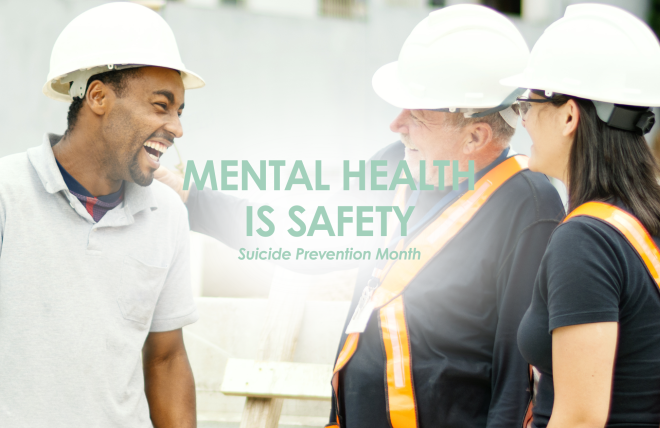
Mental Health Is Safety
In construction, workers are trained to identify hazards before they become incidents. We recognize unsafe conditions, address risks, and take corrective action because lives depend on it.
Mental health deserves the same proactive approach.
When someone is struggling, early support can be just as important as addressing a physical safety concern. By treating mental health as part of our overall safety culture, we create stronger teams, healthier workplaces, and better outcomes for everyone.
A Message for Suicide Prevention Month
This month, take a moment to check in with the people around you. Ask the extra question. Start the conversation. Make time to listen.
You never know what someone may be carrying, and your willingness to reach out could make all the difference.
Because at the end of the day, the most important thing we build isn't a project. It's a community that looks out for one another.
If you or someone you know is struggling, help is available. Call or text 988 to reach the Suicide & Crisis Lifeline, available 24/7. There is support, and no one has to face difficult times alone.
This Suicide Prevention Month, let's continue building a culture where safety includes both physical and mental well-being, and where every team member knows they are valued, supported, and never alone.